Sector knowledge connected: accessible to everyone who builds with it

NEB Academy connects universities, researchers and companies around the sustainable transformation of the built environment, and makes their knowledge freely accessible to professionals across Europe.
Context
NEB Academy (New European Bauhaus Academy) is a European initiative emerging from the New European Bauhaus movement of the European Union. The Academy connects universities, researchers and the business community around the sustainable transformation of the built environment, with a focus on sustainability, inclusivity and aesthetics.
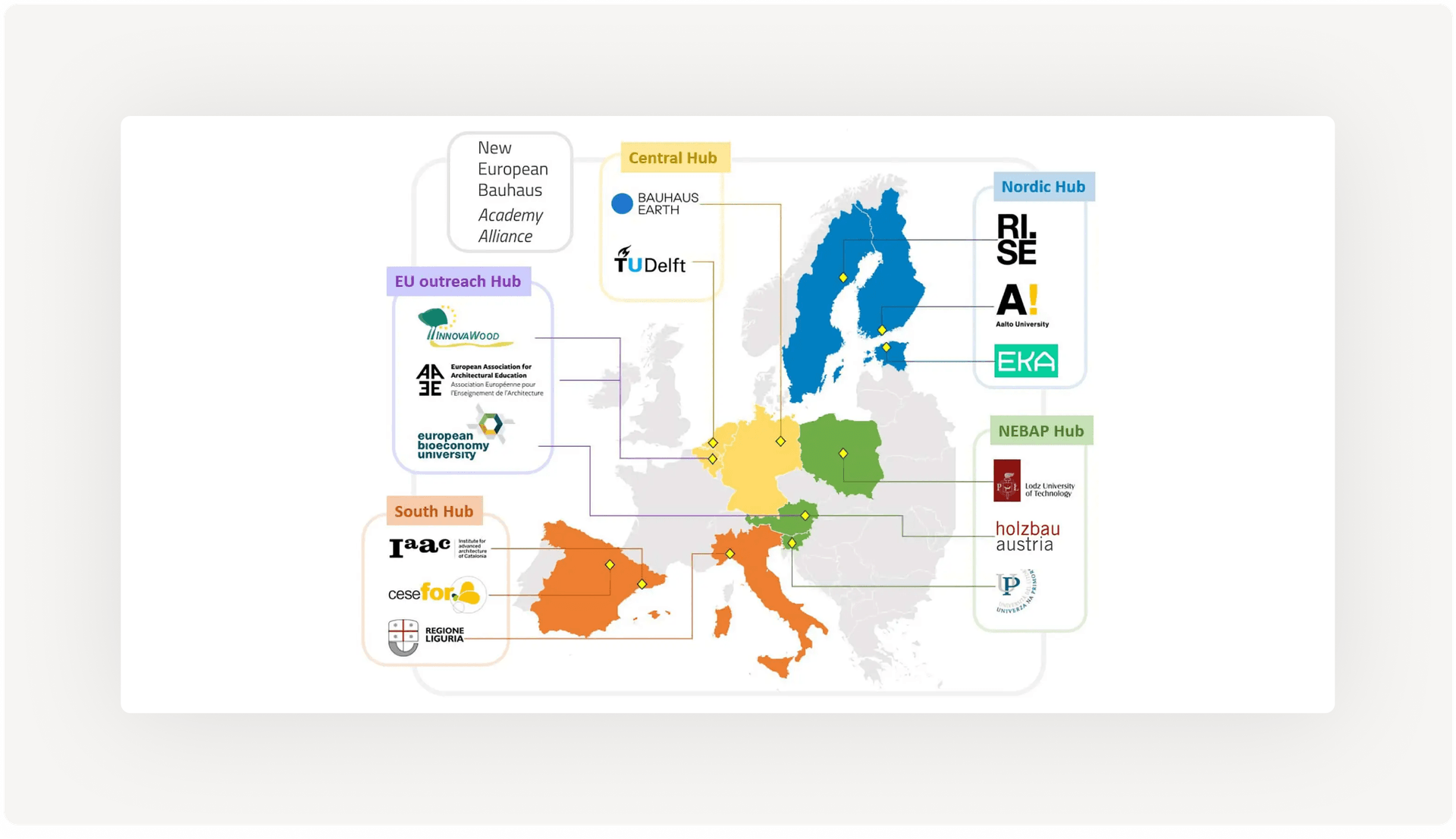
The network encompasses multiple European universities, research groups and companies. The knowledge base is substantial, the partner group international and the scale European. What was missing was the infrastructure to allow the network to function operationally as a whole.
Operational challenge
Knowledge production was fragmented: each partner institution managed its own materials on its own platforms, without central identification or a shared access structure. Publications circulated in multiple versions without a single authoritative source. Knowledge transfer between partners was handled manually. Participant progress was not visible. Onboarding new partners required bespoke configuration each time.
The operational consequence: sector knowledge did not reach professional practice in a structured way and was not made reusable across national borders.
Where value was being lost
The break occurred between knowledge production and knowledge use. Universities and research groups were producing, but the connection to professionals and companies was structurally absent. Knowledge was not indexed, not made accessible and not traceable to a central source. As a result, the value of the network was not being realised.
Studio Vi’s approach
Existing knowledge sources and partner relationships were taken as the starting point. The approach focused on designing a shared knowledge infrastructure that aligns with each partner’s way of working, without introducing new operational dependencies.
First, the operational structure of the network was mapped: knowledge producers, target audiences, publication formats and distribution channels. From that analysis, the architectural decisions were made, modular and multilingual, so that new partners and disciplines can be added without disrupting the existing infrastructure.
As the foundation, the open-source basis of TU Delft’s Digipedia project was used, not as a copy, but as a point of departure for an independent European knowledge infrastructure with its own identity, its own roadmap and its own governance.
Modules / Capabilities
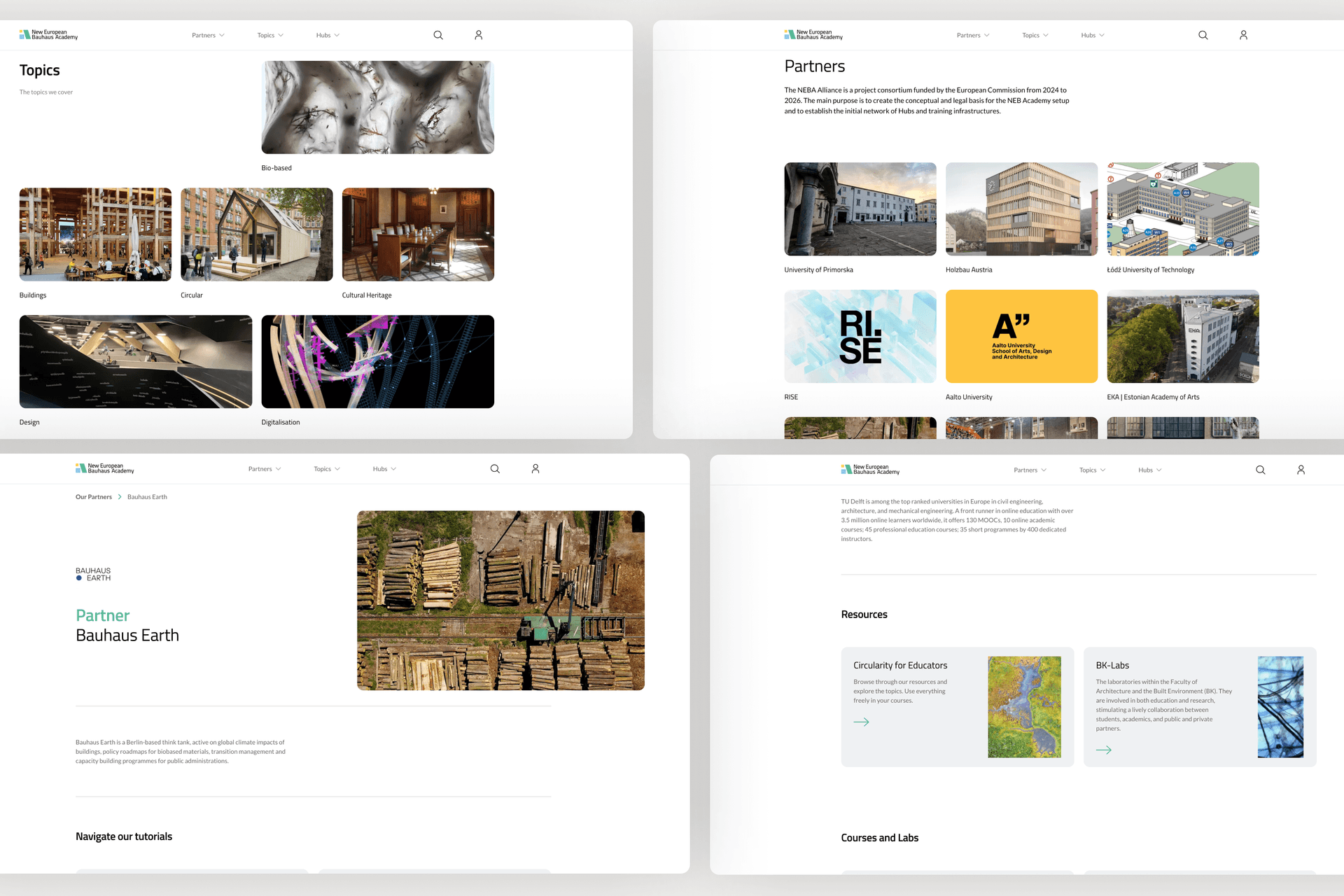
Knowledge Access A central knowledge base bringing together learning materials from universities and companies, organised by theme and partner. Accessible to professionals by subject or organisation.
Resource Intelligence Unique identification per knowledge item, comparable to a DOI system. One central source per piece of learning material, publishable across multiple platforms without duplication. Knowledge becomes reusable and traceable.
Multilingual Knowledge Infrastructure Learning materials in multiple languages, including Ukrainian. Multilingualism is a structural principle of the infrastructure, not an add-on option.
Learning Intelligence A dashboard for participants providing visibility into progress, materials viewed and courses booked. Visibility over knowledge uptake at both user and organisational level.
Partner and Access Management Scalable management for partners and users via a proven CMS. New contributions can be added without technical intervention. Hosting configured in coordination with TU Delft’s IT and security department.

Daan Ruitenberg Partnership Manager
Curious how this works in your projects?
Connected operations
Universities, research groups and companies from multiple European countries contribute to one shared knowledge environment. The infrastructure scales accordingly: each new partner expands the reach and depth of the knowledge base without requiring the existing structure to be reconfigured.
Operational impact
NEB Academy has a live knowledge infrastructure that is actively populated by European universities and partners. The Academy operates as an independent movement, with its own identity and its own roadmap.
Knowledge fragmentation within the network has been structurally reduced. Sector knowledge has been made reusable and accessible across national borders. The network of contributing partners is demonstrably growing.
From September 2026, the infrastructure will be extended with modules that NEB Academy itself prioritises, based on the questions emerging from its growing network.

“The great thing about Studio Vi is that they can make something academic look beautiful and appealing, while also being an absolute pleasure to work with.”
Dr.ir. F.D. van der Hoeven
Director of Research, TU Delft Faculty of Architecture and the Built Environment